
Why Bands Running on WhatsApp and Spreadsheets Are Making Gigs Harder
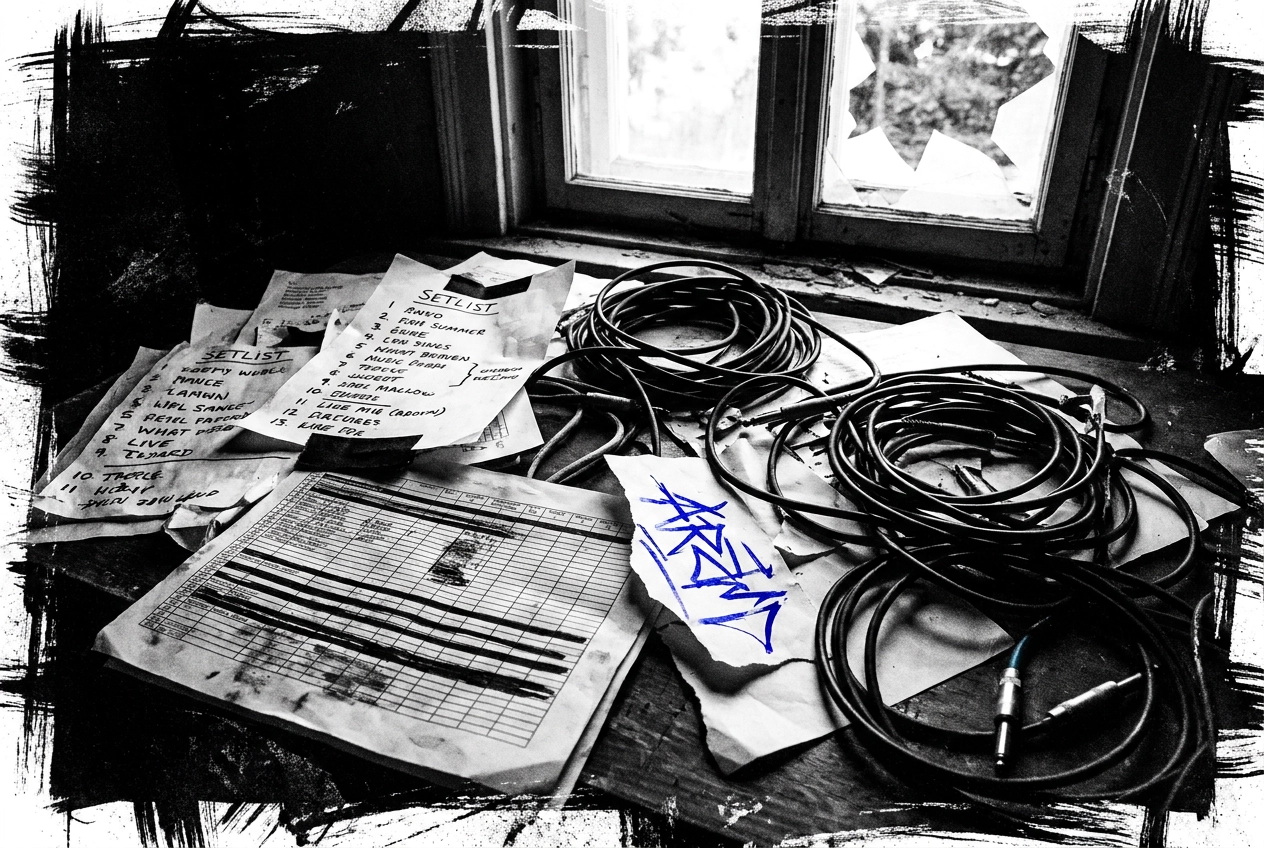
Someone in the group chat changed three songs in the setlist. You saw the message. Maybe. It was somewhere between the debate about parking and the thread where everyone sent their availability for next month. By the time soundcheck rolls around, half the band is playing the old running order and nobody can find the updated one.
If that sounds familiar, you are not alone. Most bands at the beginner and semi-pro level are running their entire operation across WhatsApp, a shared spreadsheet, a few emails, and a paper checklist that one person definitely left on their kitchen counter. It feels manageable until it suddenly, painfully, isn't.
This post is a frank look at what that fragmented setup is actually costing you. We will walk through why WhatsApp fails as a band management system, why your spreadsheet is probably already out of date, and why not having a proper setlist tool is eating into your rehearsal time, not just your admin time. By the end, you will have a clear picture of why consolidating your tools is not a luxury. It is just the basics.
The Set Change Nobody Got
It's the night of the gig. You're at the venue, twenty minutes before soundcheck, and someone asks about the new running order. "We changed it," the guitarist says. "Agreed it in the WhatsApp voice note last Tuesday." Cue thirty seconds of frantic scrolling through 200 messages about parking, missing leads, and someone's mate who might be able to help with a van. Nobody finds it. The old setlist is what you play.
That is not bad luck. That is the predictable result of running band operations through a tool built for casual conversation. Research into high-stakes coordination environments confirms that communication failures are not random; they emerge structurally when critical information flows through fragmented, unauditable channels. A WhatsApp group is exactly that kind of channel.
This piece is a frank audit of what bands actually lose by staying with disconnected tools: rehearsal time, money, booking reliability, and gigs themselves. If you've ever thought "that's just how it is in a band," this is written for you. The friction you've accepted as normal has a name, and it's costing you more than you've counted.
We're going to work through five specific failure modes:
WhatsApp, where critical decisions disappear into the scroll
Spreadsheets, which go stale the moment someone forgets to update them
Paper checklists, which are only useful when you haven't left them at home
Booking errors, which damage your reputation in local circuits
Rehearsal time, the hidden casualty of admin that never ends
WhatsApp Is Built for Chat, Not Band Operations
The problem is not that your band uses WhatsApp. The problem is that WhatsApp was designed for conversations, and you are trying to run operations with it. It has no task ownership, no version history, and no way to retrieve a specific decision made three weeks ago without scrolling through dozens of voice notes about what time the van is leaving.
Information loss in a busy group thread is not accidental; it is structural. Once a message scrolls out of view, it is effectively gone. Searching chat histories during soundcheck is not a workflow. It is a sign the workflow has already broken down.
The deeper issue is accountability, or rather the absence of it. When a set change, a load-in time, or a deposit deadline is posted in a thread, it belongs to nobody. Everyone saw the notification. Nobody owns the action. That is a gap that fills with missed cues and unanswered venue emails.
It also gets worse the more active your band becomes. A group chat with two gigs a year is manageable. Add more members, more shows, more last-minute changes, and the chat becomes noisier while the critical information becomes harder to find. Volume is the enemy of signal.
The real-world consequence looks like this: two members turn up to rehearsal having learned a song in the wrong key because the correction was posted in the thread and the notification got swiped away. No malice, no carelessness. Just a tool being used for something it was never built to do. A proper band management setup makes that kind of failure structurally impossible.
Spreadsheets Feel Organised Until They Go Stale
WhatsApp loses information in the scroll. Spreadsheets have a different problem: they look organised right up until someone forgets to update them.
Every band has one person who maintains the master spreadsheet. They keep the gig dates current and add new songs to the list. That person also has a job, a life, and eventually a creeping resentment about doing the admin nobody else touches. When they get tired, the spreadsheet quietly goes stale, and nobody notices until something goes wrong.
The core limitation is simple: a spreadsheet notifies nobody when something changes. A gig moves from the 14th to the 21st, someone updates the sheet, and three members spend the next fortnight with the wrong date in their heads because they are working from the version they last opened. No alert, no indicator, nothing.
Version conflicts make this worse. Two members editing the same Google Sheet at once creates silent overwrites. One member still using a downloaded Excel file from two months ago is operating on entirely different information, and nobody will know until it matters.
For setlists specifically, a spreadsheet is a particularly poor fit. There is no drag-and-drop reordering, no space for per-song notes, no shareable link that updates in real time the way a proper setlist tool would. Moving a song means cutting, pasting and hoping nobody has the old version open.
The honest answer to "Google Sheets works fine" is: yes, for two gigs a year, it probably does. Add more members, more gigs, more last-minute changes, and each limitation compounds. The system does not break dramatically; it just costs a little more time and trust at every gig.

Paper Checklists Get Left at Home
Stale spreadsheets are one problem; scattered preparation is another entirely.
A paper checklist sounds sensible until you are standing at the venue and it is sitting on your kitchen table. That is not carelessness, it is just how paper works: it only helps the person who has it, and only when they have it with them.
The knock-on from missing gear runs further than the missing item itself. A forgotten DI box or a misplaced cable eats into soundcheck time, rattles the band's confidence, and leaves the venue with an impression of a group that does not have its act together. That impression matters, particularly if you want to be rebooked.
Physical lists also go stale without anyone noticing. A new pedal joins the rig, the list never gets updated, and three gigs later it gets left behind because nobody remembered to add it. The list looks complete, so nobody questions it.
The wider problem is fragmentation. The checklist is on a printed sheet, the setlist is in a WhatsApp thread, the stage plot is in a Drive folder. Pre-gig prep becomes a hunt across three separate places rather than a single, coherent run-through.
A digital checklist that lives alongside the gig details and setlist removes all of that. Set Buddy's Gig Bag feature keeps equipment prep in the same place as everything else for that show, on the same phone you are already using to take your set on stage. Nothing to print, nothing to forget on a desk.
Double Bookings and Missed Confirmations Damage Your Reputation
Missing gear is one kind of problem. Showing up to the wrong venue on the wrong night is another category entirely.
Booking errors rarely happen because a band is careless. They happen because the gig calendar is spread across a WhatsApp thread, someone's personal Google Calendar, and a shared spreadsheet that three people update independently. When those three sources fall out of sync, nobody notices until a venue is waiting and the band is somewhere else.
The damage goes well beyond the lost fee. Small venues operate on thin margins and tight schedules, and a no-show or a missed confirmation wastes their staff time, their sound engineer, and their audience. They remember. Local gigging circuits are small, and venue bookers talk to each other. One reliability failure can quietly close several doors.
This is the core problem with using a generic calendar app as a band organisation app: a calendar entry has a date and a time, and that is all. It has no concept of a load-in time, a stage plot, a contact name, or which setlist the band is playing. All of those details live somewhere else, which means pulling everything together before each show involves checking four or five places, every single time. That coordination overhead is where mistakes enter.
Centralised gig management removes that gap. When the venue details, set, stage information, and contacts all live inside one event record, there is one version of the truth and everyone sees it. There is nothing to sync, and nothing to miss.
The Hidden Cost Is Rehearsal Time, Not Just Admin Time
Booking failures cost you gigs. But there is a subtler cost that compounds across every week of your gigging calendar: the time you never got to spend actually playing.
Every search through a WhatsApp history, every cross-referencing of two versions of the same spreadsheet, every confirmation you have to chase is rehearsal time you are not getting back. Individually, each incident feels minor. Across a full year of gigs, it adds up to a meaningful slice of your practice hours.
Set changes make this concrete. When a change is posted in a group chat, some members see it, some swipe past it, and the first rehearsal after that change is spent correcting the people who missed it. A setlist helper that updates instantly for everyone means you open with the right songs in the right order, not with ten minutes of confusion. That is not a small difference; it is the difference between a productive rehearsal and a wasted one.
There is also a mental cost that runs right up to the moment you walk on stage. Musicians who spent the hour before a show resolving where the updated setlist is, or whether the load-in time changed, are carrying that friction into their performance. Musicians who arrived knowing everything was already sorted are not.
The research picture confirms that bands are already running across Gmail, Google Calendar, Drive, spreadsheets, paper, and WhatsApp simultaneously. The effort is already there. Consolidation does not add another tool; it removes five inadequate ones. That is the real argument for a band organisation app: not more capability, less overhead.
Why Google's Tools Feel Like Enough But Aren't
So if the tools discussed so far feel a little chaotic, you might have landed on Google's suite as the sensible middle ground. Docs, Gmail, Calendar, Drive: free, familiar, and available on every device. For a lot of gigging musicians, this combination feels like the grown-up solution.
The problem is not that these tools are poorly made. It is that none of them were built with a band in mind. Each one handles one slice of the job competently, then stops. A setlist sitting in Google Docs has no connection to the gig it belongs to. A date in Google Calendar knows nothing about the stage plot, the load-in time, or the equipment required. A Drive folder full of useful documents notifies nobody when something gets updated.
Every link between these tools has to be maintained manually, by a person, every time something changes. That is fine when a band plays occasionally and life is simple. As the gigs stack up, the venues diversify, and the lineup shifts, the manual effort required to keep everything synchronised grows proportionally. At some point it exceeds what one person can realistically carry.
The telling thing is how the breakdown tends to happen. It is rarely dramatic. Weeks of "this is fine" accumulate quietly, right up until a missed confirmation or a venue-facing mistake makes it suddenly obvious that the system was never robust; it was just not being stress-tested. The tools did not fail. The architecture did.
Consolidation Is the Minimum Viable Fix, Not a Luxury
So once you accept that no single tool in your current stack was built for band operations, the answer is not to find a slightly better spreadsheet. It is to stop splitting everything across six places and move it into one.
That is the actual argument for a consolidated band management platform: not that it gives you features you never had, but that it replaces a chain of broken partial solutions with a single coherent system. Set Buddy Live is built precisely for this. Songs, setlists, gigs, equipment, stage plots, and gig preparation all live together, accessible on desktop or as an installable mobile app that works offline at the venue.
That offline capability is not a minor technical detail. Venues are exactly where connectivity becomes unreliable, and a setlist tool that needs a signal is not dependable when it counts. The app is designed to work without one.
The setlist side of this is worth spelling out. A shareable link that updates in real time means every band member sees the same version, always. The built-in Gig Mode gives you a clean, distraction-free on-stage view. That combination replaces the entire chain of WhatsApp messages, printed sheets, and last-minute screenshots that currently passes for setlist communication.
For bands gigging in Germany, the GEMA export feature generates a finished, ready-to-submit setlist report directly from the gig record. One less post-gig admin task.
And the free tier means cost is not the reason to put this off. Consolidation is available to amateur bands at zero cost. That makes it the minimum viable organisation, not an optional upgrade for bands who have already sorted everything else.
Stop Managing Your Band in Six Places at Once
Fragmented tools are not a neutral choice. Every gig your band plays while running on WhatsApp threads, stale spreadsheets, and paper checklists carries a hidden overhead: rehearsal time lost to confusion, bookings put at risk by miscommunication, and performance focus eroded by last-minute scrambles.
Staying with the current setup is not the safe default. It is an ongoing operational tax, paid in small instalments on every single show.
Here is a quick audit worth doing right now. Before your next gig, count how many separate places you need to check: where is the confirmed setlist? Where are the gig details? Where is the equipment list? Where is the stage plot? If the honest answer involves four different apps, a chat thread, and something written on a bit of paper, that is the problem in plain view.
Set Buddy Live's free tier puts all of that into one place, at no cost. No financial commitment, no lengthy setup. The argument for consolidation tends to make itself the first time you arrive at a gig knowing everything is already in order, rather than spending the hour before doors resolving logistics.
The reason you joined a band was to play music. Every minute spent chasing a set change through a group chat is a minute borrowed from that. The minimum viable organisation is simply whatever gets you off the logistics treadmill and back to the thing that matters.
Conclusion
Fragmented tools are not a harmless habit; they are an active drain on your band's time, focus, and reputation. The core takeaways are straightforward: WhatsApp and spreadsheets create information gaps that surface at the worst possible moments, missed confirmations and stale data put bookings at genuine risk, and the real cost is rehearsal time and performance quality, not just admin friction.
The fix does not require a significant investment. It requires consolidation. One place for setlists, gig details, equipment lists, and stage plots removes the scramble before it starts.
Set Buddy Live's free tier gives you that consolidation at no cost.
Do the audit today. Count the apps, threads, and scraps of paper holding your next gig together. Then ask whether any of that is worth protecting. You joined a band to play music. Start treating your time that way.